15 Módulo de transferencia de calor & inglés terms
These words will be part of the third activity of the module
Conduction shape factor
Noun
The heat transfer from one surface (at a temperature T1) to the other surface (at T2) can be expressed as: q=Sk(T1-T2) where k is the thermal conductivity of the solid and S is the conduction shape factor.
Example: The shape factor can be related to the thermal resistance: q=Sk(T1-T2)=(T1-T2)/(1/kS)= (T1-T2)/Rt
where Rt = 1/(kS)
es: Factor de forma de conducción
Convection resistance
Noun
Convection resistance can be defined as the inverse of the convection heat transfer coefficient per unit area
Example: Convection and radiation resistances on a surface are parallel since both convection and radiation heat transfers occur simultaneously
es: Resistencia a la convección
Critical radius of insulation
Noun
A critical radius of insulation is defined as the outer radius
that provides maximum rate of heat transfer. For a cylindrical layer, it is defined as rcr k / h where k is
the thermal conductivity of insulation and h is the external convection heat transfer coefficient.
Example: For a cylindrical pipe, the critical radius of insulation is defined as rcr k / h . On windy days, the
external convection heat transfer coefficient is greater compared to calm days. Therefore critical radius of
insulation will be greater on calm days.
es: Radio crítico de aislamiento
Cylinder conduction resistance
Noun
Now consider the one-dimensional steady-state flow of heat through a cylindrical or spherical layer that is exposed to convection on both sides into fluids that are at temperatures T∞1 and T∞2, with heat transfer coefficients h1 and h2, respectively. In this case, the network of thermal resistances consists of a resistance to conduction and two to convection, in series, as precisely that for the flat wall and the rate of heat transfer under stationary conditions
Example: In stationary operation there is no change in tube temperature with time at any point.
es: Resistencia de conducción del cilindro
Efficiency
Noun
Relationship between the work done by a heat engine and the heat energy absorbed by it.
Example: The machine has excellent efficiency and makes work easier
es: Eficiencia
Fin effectiveness
Noun
The fin temperature effectiveness or fin efficiency is defined as the ratio of the actual heat transfer rate through the fin base divided by the maximum possible heat transfer rate through the fin base, which can be obtained if the entire fin is at base temperature (i.e., its material thermal conductivity is infinite).
Example: In an extended surface heat exchanger, heat transfer takes place from both the fins (ηf < 100%) and the primary surface (ηf = 100%). In this case, the total heat transfer rate is evaluated through a concept of total surface effectiveness or surface efficiency ηo
es: Eficacia de la aleta
Fin efficiency
Noun
Fin efficiency is defined as the ratio of actual heat flow of the fin to that which would be obtained with a fin of constant temperature uniformly equal to the base surface temperature, that is, one with infinite thermal conductivity.
Example: Fin Efficiency is the ratio of the heat transferred by a fin to the heat that would have been transferred if the total fin surface were at the base (or wall) temperature.
es: Eficiencia de las aletas
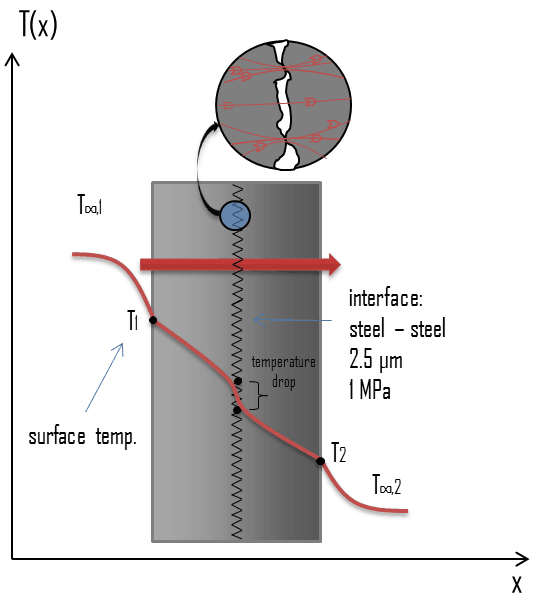
Interface resistance
Noun
Decreased heat flow caused by imperfect contact between two materials at an interface.
Example: Quantitatively, the difference in temperature across the interface, divided by the heat flow through it.
es: Resistencia de interfaz
Plane wall conduction resistance
Noun
Simplified thermal resistance for flat walls of equal area (m² · K / W). T = temperature (K).
Example: Heat conduction in a large flat wall. Consider the flat wall of thickness 2L, in which there is uniform and constant heat generation per unit volume, qV [W / m3]. Thermal engineering
es: Resistencia a la conducción de la pared plana
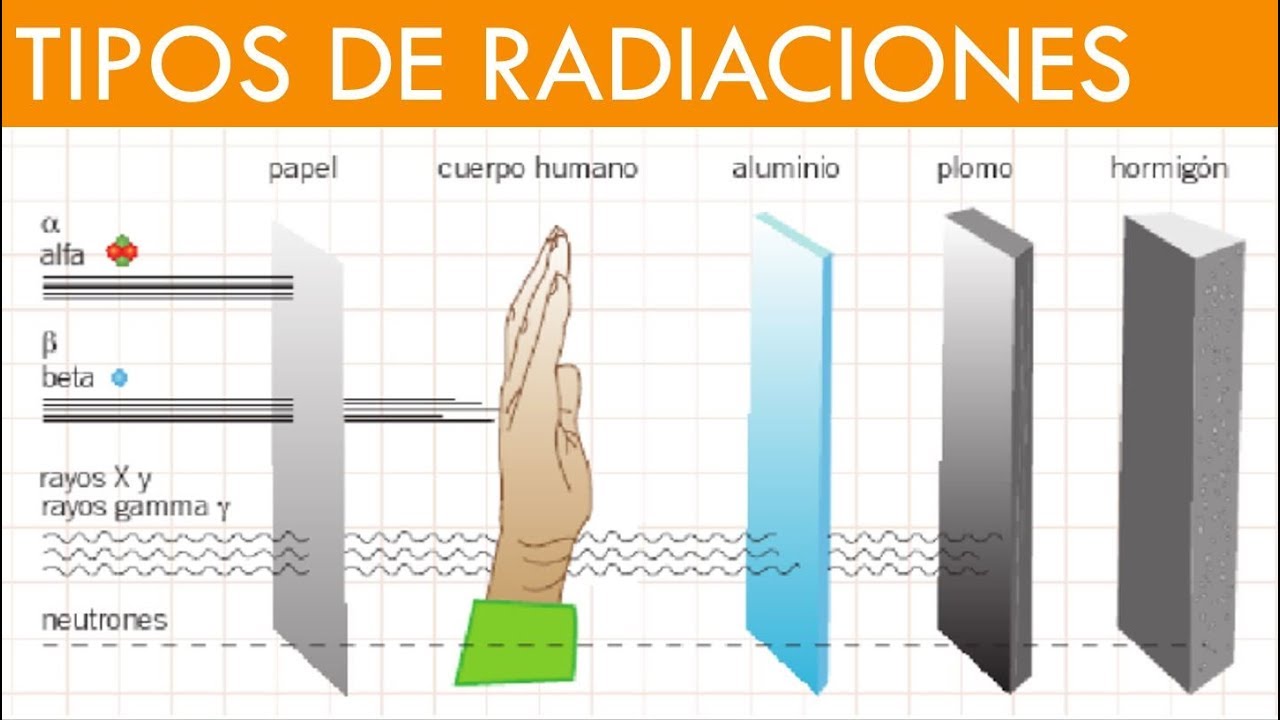
Radiation resistance
Noun
Radiation resistance is the act of manufacturing electronic components and systems that are resistant to damage or malfunction caused by ionizing radiation.
Example: Radiation resistance occurs in outer space, high altitude flights, around nuclear reactors and particle accelerators, or in nuclear accidents.
es: Resistencia a la radiación
Sphere conduction resistance
Noun
Now consider the one-dimensional steady-state flow of heat through a cylindrical or spherical layer that is exposed to convection on both sides into fluids that are at temperatures T∞1 and T∞2, with heat transfer coefficients h1 and h2, respectively. In this case, the network of thermal resistances consists of a resistance to conduction and two to convection, in series, precisely like that for the flat wall and the rate of heat transfer under stationary conditions
Example: Stationary heat transfer through multiple spherical layers can be handled as in the case of multi-layer flat walls discussed earlier.
es: Resistencia a la conducción de la esfera
Surfaces
Noun
the outside part or uppermost layer of something (often used when describing its texture, form, or extent).
Example: The Panasonic has a safety sticker warning about steam and hot SURFACES
es: Superficies
Thermal contact conductance
Noun
It is a property that indicates the thermal conductivity, or ability to conduct heat, between two bodies in contact. The inverse of this property is called thermal contact resistance.
Example: When two solid bodies come into contact, like A and B in Figure 1, heat flows from the warmer body to the cooler body. Based on experience, the temperature profile across the two bodies varies, approximately
es: Conductancia de contacto térmico
Thermal contact resistance
Noun
represents the conduction of heat between two solid bodies. When components are bolted or pressed together, a knowledge of the thermal performance of such joints is also needed.
Example: This drop in temperature is characterized by the coefficient of thermal contact conductance, h c, which is a property that indicates the thermal conductivity, or the ability to conduct heat, between two bodies in contact.
es: Resistencia al contacto térmico
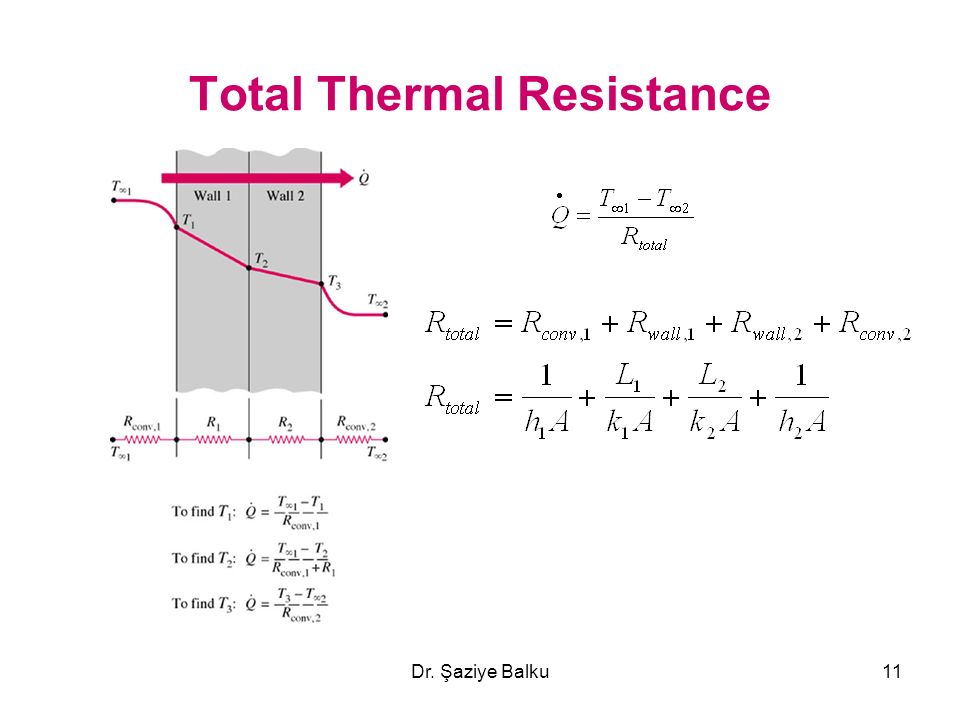
Total thermal resistance
Noun
Thermal resistance is a heat property and a measurement of a temperature difference by which an object or material resists a heat flow. Thermal resistance is the reciprocal of thermal conductance.
Example: The thermal resistance of a material represents the ability of the material to oppose the flow of temperature.